A couch can look clean long after it has started collecting body oils, dust, food particles, pet dander, and other residue. Because upholstery does not always show soil as quickly as carpet, many homeowners wait until cushions look noticeably dark, odors develop, or a spill becomes hard to ignore before thinking about professional cleaning. That approach can work for lightly used furniture, but by the time fabric looks visibly dirty, soil may already be embedded within the fibers, along seams, and around the areas that get the most contact.
Professional upholstery cleaning every 12 to 24 months is a reasonable starting point for many households, but no single schedule fits every sofa, chair, or sectional. Pets, children, fabric type, frequency of use, and even where a piece sits in the room all change how often cleaning makes sense. The better question is not how many months have passed, but what has actually been happening to the furniture during that time.
Most Upholstery Accumulates Soil Gradually
Upholstered furniture collects more than visible crumbs and occasional spills. Every time someone sits down, skin oils, perspiration, hair products, and lotions transfer onto the fabric, and this buildup develops so gradually that most homeowners never notice it happening. The pattern usually shows up first in high-contact areas like armrests, headrests, and the center of frequently used cushions, which look noticeably darker or duller than sections that see less contact even with regular vacuuming.
A 12 to 24 Month Schedule Works for Many Homes
That 12-to-24-month range is intentionally broad because usage matters more than a rigid calendar. A formal sofa used a few times a month may stay relatively clean for years, while a family-room sectional used nightly by adults, children, and pets may need attention much sooner. The same logic applies to dining chairs, recliners, ottomans, and headboards, since daily contact accumulates oils and soil faster than occasional use. Evaluate each piece by how it is actually used rather than scheduling everything on the same interval.
Homes with Children Often Need More Frequent Cleaning
Children naturally create more opportunities for upholstery to become soiled. Snacks, drinks, craft materials, outdoor soil, sticky hands, and everyday play affect sofas and chairs, and even when major spills are cleaned immediately, smaller residues build gradually. Families with young children may find that heavily used upholstery benefits from professional cleaning every 6 to 12 months, depending on the fabric and activity level. Frequent cleaning does not mean aggressive cleaning, since the method still needs to match the material.
Pets Can Change the Cleaning Schedule Significantly
Pet owners often need to clean upholstered furniture more frequently than households without animals. Dogs and cats bring hair, dander, outdoor soil, skin oils, and odors onto furniture, and if pets regularly sleep on a couch or chair, these materials accumulate quickly. Pet accidents create an additional challenge because urine or other liquids can move beyond the surface fabric and into the cushion filling or underlying materials, so surface cleaning alone may improve appearance without addressing the source of an odor. An experienced professional needs to determine how deeply the contamination has traveled and whether the cushion material itself has been affected.
Fabric Type and Cleaning Codes Determine the Right Approach
Not every upholstered surface handles soil, moisture, or cleaning chemistry the same way. Durable synthetics often tolerate regular use well, while natural fibers and luxury upholstery, including linen, cotton, wool blends, velvet, and silk-containing fabrics, require more care and can react differently to moisture, agitation, and drying conditions.
Most upholstered furniture carries a manufacturer cleaning code on a tag under the cushion. A W code calls for water-based cleaning agents only. An S code calls for a water-free, solvent-based cleaner instead, since water can shrink the fabric, bleed the dye, or leave rings. WS means either approach is generally safe, and an X code means vacuum only, with no liquid cleaning agent at all. That tag is a useful starting point, but the ANSI/IICRC S300 standard for professional upholstery cleaning notes that codes alone should not replace direct evaluation, since a trained technician also verifies fiber content, construction, and colorfastness before choosing a method. Relying on the code alone, or ignoring it entirely, is one of the more common ways well-intentioned cleaning, professional or DIY, ends up causing damage instead of preventing it.
Professional cleaning should always begin with identifying the fabric and its code rather than selecting a method based only on how dirty the furniture looks. This matters most in luxury homes throughout Los Angeles, Beverly Hills, Brentwood, Santa Monica, Malibu, and surrounding communities, where designer fabrics and fine textiles can be permanently damaged by a generic approach.
Dark Areas on Armrests and Headrests Take Time to Reverse
Darkening around armrests and headrests is usually mistaken for ordinary dirt, but skin oils, hair products, and lotions coat the fibers first, and dust adheres to that residue, making the area look progressively darker. This buildup also gets harder to remove the longer it sits, not just more visible: body oils oxidize as they age, and oxidized oil bonds to the fiber differently than fresh oil, which is part of why a months-old stain is often more stubborn than one a few weeks old. Between cleanings, avoid repeatedly applying household spot cleaners here, since some products leave residue that attracts additional soil and makes the fabric look dirty again even faster.
Vacuuming Upholstery Helps Extend Time Between Cleanings
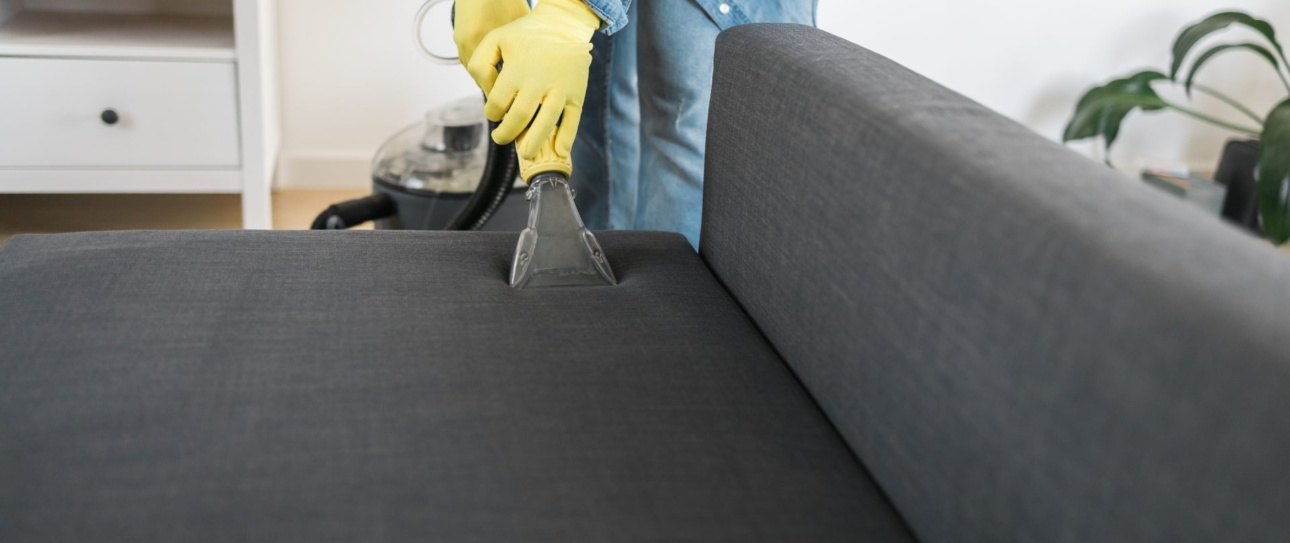
Professional cleaning matters, but routine maintenance still counts. Vacuuming upholstered furniture removes dry soil, pet hair, crumbs, and particles before they settle deeper into the fabric. Seat cushions should be removed periodically so debris can be cleaned from underneath and around seams, since crevices collect dry soil that is not visible during normal use. Vacuuming will not remove oils or embedded residue, but it reduces how much abrasive material stays in contact with the fabric, helping upholstery stay cleaner longer between professional cleanings.
Waiting Until Furniture Looks Dirty Can Be Misleading
Visible appearance is not always a reliable measure of cleanliness. Dark and patterned fabrics hide soil extremely well: a beige sofa may show buildup quickly, while a charcoal sectional can hold similar contamination without looking dirty. Odor can become noticeable before visual soil does, and texture is another clue, since fabric that once felt soft may begin to feel slightly stiff or coated in high-contact areas. Usage history is often more useful than appearance alone: a sofa used daily for years without professional cleaning is worth evaluating even if it still looks acceptable.
Address Spills Before They Become Set-In Stains
A regular cleaning schedule is useful, but spills should not wait. Wine, coffee, grease, and pet accidents become harder to treat the longer they sit, and blotting a fresh spill with a clean white towel is safer than scrubbing, which can spread the contamination and distort the fabric. Our guide to spotting upholstery before a professional visit covers the full blotting and waiting-period process in more depth. If careful blotting does not resolve the problem, professional evaluation is usually safer than repeated attempts with different products.
Frequently Asked Questions
How often should a couch be professionally cleaned if nobody has pets?
Approximately every 12 to 24 months is often reasonable for an average household without pets or young children. Furniture that receives very little use may go longer, while a heavily used family-room sofa may need attention sooner.
Can upholstery be cleaned too often?
Only if inappropriate methods are used repeatedly. Cleaning should be based on actual need and the fabric’s characteristics. More frequent cleaning is not harmful when the correct process is used, but it does not provide extra benefit either.
Should I clean my sofa before it starts to smell?
Usually, yes. Odor often develops after oils, spills, or pet contamination have accumulated for a while, and preventive cleaning is easier than waiting until it becomes noticeable.
Can professional cleaning remove every upholstery stain?
No. Many stains can be improved or removed, but dye loss, sun fading, and some old stains may not respond completely. A good evaluation sets realistic expectations before treatment begins.
How long does upholstery usually take to dry after professional cleaning?
Drying time depends on the fabric, cleaning method, moisture used, airflow, and humidity. Proper extraction and ventilation matter, since upholstery should dry thoroughly before heavy use resumes.
Protecting Upholstery Through the Right Cleaning Schedule
There is no single schedule that works for every sofa, sectional, or household. Professional cleaning every 12 to 24 months is a practical starting point, but pets, children, daily use, body oils, fabric type, and the age of the furniture can all shorten that interval, while lightly used pieces may need far less attention.
The most important point is not to wait until the upholstery becomes heavily soiled. Routine vacuuming, prompt spill care, and periodic professional cleaning help prevent gradual buildup from becoming harder to remove. If you are also wondering about the rest of the home, our companion guide on how often carpet should be professionally cleaned covers that side of the house.
At Dave’s Carpet and Upholstery Cleaning, decades of hands-on experience have shown that successful upholstery cleaning begins with identifying the material and understanding what caused the problem. A darkened armrest, lingering odor, pet stain, water mark, or discolored cushion may each require a different approach. If your couch, chairs, sectional, or other upholstered furniture has not been professionally cleaned in some time, contact us for an honest evaluation of the fabric, soil level, stains, odors, and overall condition before we recommend a cleaning method.
Call (310) 230-3800 to schedule professional couch and sofa cleaning and keep your furniture cleaner, fresher, and better cared for over the long term.